


BOT360 – The Autonomous RAN Integration Testbed
BOT360 completely transforms how BBUs, RRUs, and RAN elements are integrated, validated, and monitored. Built with AI-governed orchestration, rugged hardware, real-time telemetry, and zero-touch automation, BOT360 eliminates the need for manual commands, multiple OEM tools, and human-dependent processes.
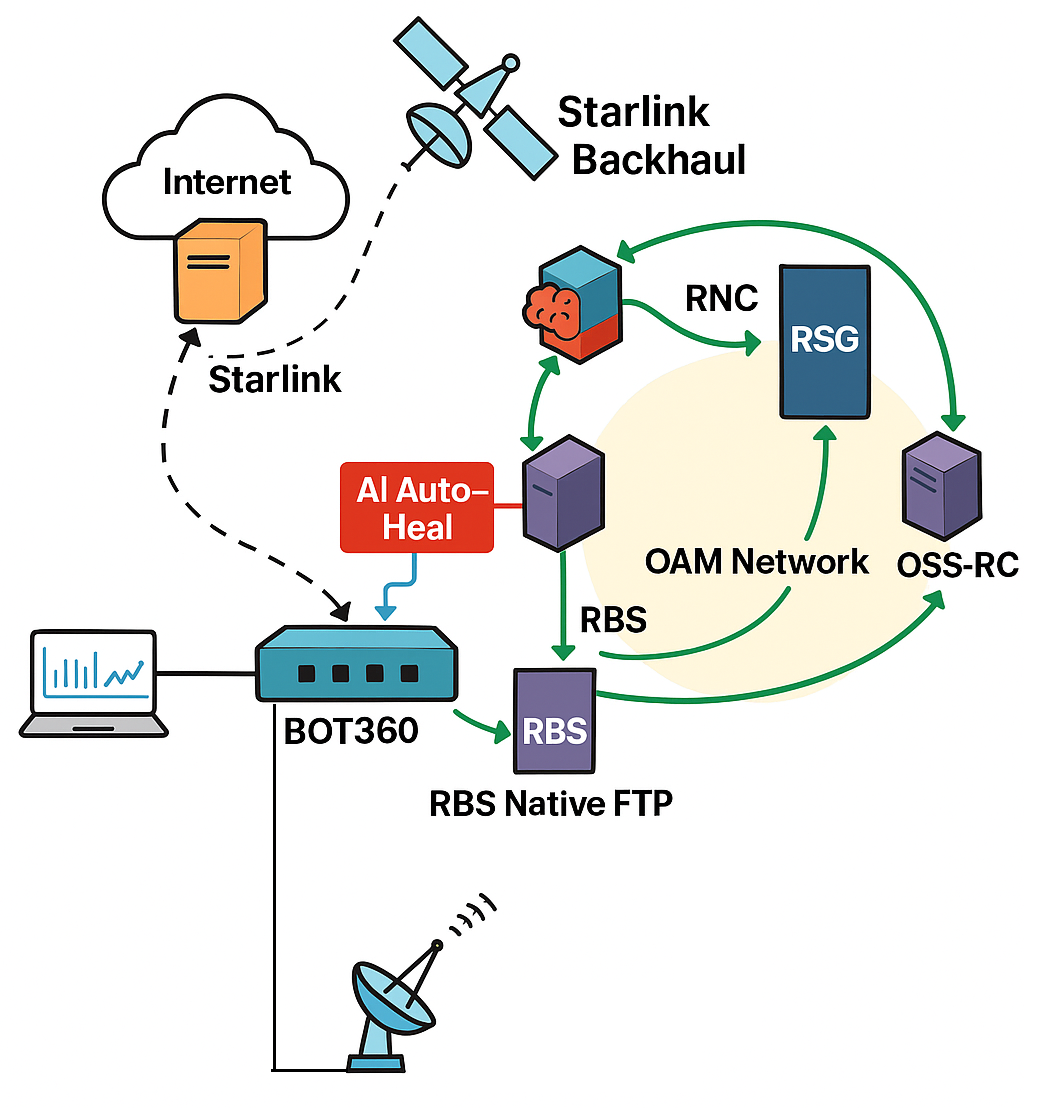
The diagram illustrates an end-to-end RAN integration and connectivity workflow in which BOT360 operates at the network edge while Starlink provides an optional resilient backhaul path. BOT360 retrieves site configuration files and software packages from an SFTP server over the Internet—either through direct connectivity or via Starlink—and performs automated provisioning with AI Auto-Heal for real-time fault detection and correction. It then transfers software bundles and configurations to the RBS using RBS Native FTP. From there, the radio integration workflow progresses upstream as the RBS communicates with the RSG, which forwards signaling to the RNC, enabling operational and control messaging toward the OSS-RC for supervision. The OSS-RC interacts with the OAM Network to deliver continuous monitoring, configuration updates, and validation. The OAM network returns supervisory feedback to the RBS, ensuring that all RAN elements (RBS → RSG → RNC → OSS-RC) remain synchronized and correctly configured. A Starlink ground terminal further enhances the system by offering an alternative WAN path for BOT360, enabling the workflow to function reliably even in remote or infrastructure-limited environments.
BOT360 is not just a monitoring system it acts, automates, heals, predicts, and governs the complete site integration lifecycle.
BEFORE BOT360 vs AFTER BOT360
| BEFORE BOT360 (Legacy RAN Integration) | AFTER BOT360 (AI-Governed Autonomous Integration) |
|---|---|
|
Zero-Touch BBU/RRU Integration
AI-Assisted Live Diagnostics + Auto-Healing
Unified CPRI/L1 Dashboard
|
First Fully Automated BBU/RAN Testbed
BOT360 combines hardware intelligence, AI logic, topology auto-discovery, and integration orchestration to deliver true autonomous RAN integration.
Zero-Touch Field Readiness
Primer boxes boot → auto-register → auto-map → auto-validate without any human action.
AI-Driven Troubleshooting & Self-Healing
BOT360 diagnoses issues, correlates logs, repairs misalignments, and clears alarms automatically.
Provides real-time visibility from physical wiring to L1 sync—all in one pane of glass.
Field Parity Testbed Mimicking Operator Environments
Multi-box, multi-vendor, real-rack simulation, making BOT360 the ideal tool for labs + field rollout.
Wi-Fi + Starlink-ready connectivity
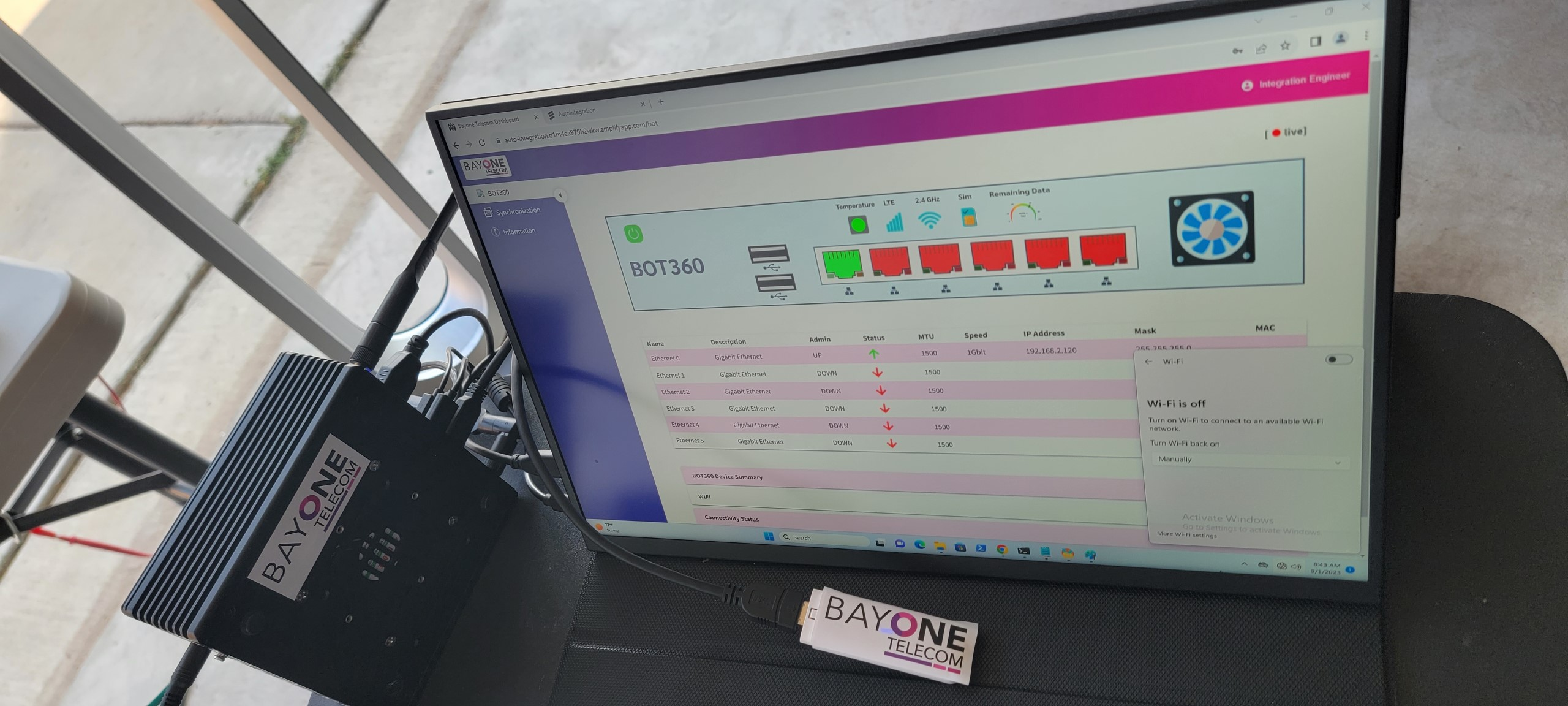
The snapshot captures a fully operational BOT360 edge integration unit deployed in a real on-site environment, connected to a monitor running the live BOT360 dashboard. The ruggedized edge AI hardware, running BOT360 software, displays real-time telemetry including interface status, MTU, throughput, IP allocation, temperature, fan RPM, Wi-Fi state, and overall system health demonstrating BOT360’s ability to deliver instant visibility, autonomous diagnostics, and precise edge-level integration control directly from the field. This live setup validates BOT360’s readiness for real-world deployment, proving its capability to provide hardware-level telemetry, interface diagnostics, and fully autonomous integration workflows in outdoor or live-site scenarios, ensuring reliable and intelligent management of network elements under actual field conditions.
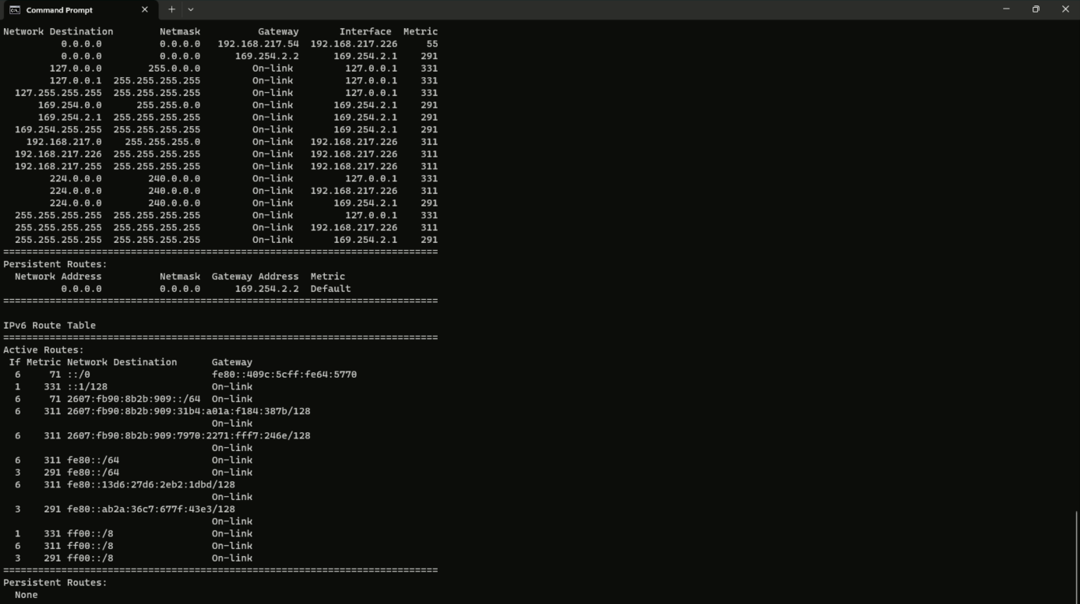
The snapshot captures a routing table dump from a live system, showing both IPv4 and IPv6 route entries. It highlights the device’s active network paths, gateway associations, and interface bindings—confirming that the system is routing traffic through the correct default gateway (192.168.217.50) with backup link-local routes over 169.254.x.x. The table also shows multiple on-link networks, loopback routes, and interface-specific metrics, demonstrating that the OS has successfully established full dual-stack connectivity. The presence of detailed IPv6 routes (including link-local and global unicast prefixes) further validates that the device supports modern multi-interface, multi-stack networking. Overall, the snapshot verifies proper routing behavior, gateway reachability, and readiness for upstream communication.
Pi-based BBU emulation with top-mounted e-ink status displays + 3GPP CLI/shell emulation + sequential & concurrent provisioning validation Raspberry Pi “Mimiked BBU” nodes equipped with top-mounted e-ink status panels and 3GPP CLI/shell emulation to stress-test and validate the end-to-end provisioning framework—covering both sequential and concurrent provisioning flows, including automated flashing and application of BBU configuration profiles.